
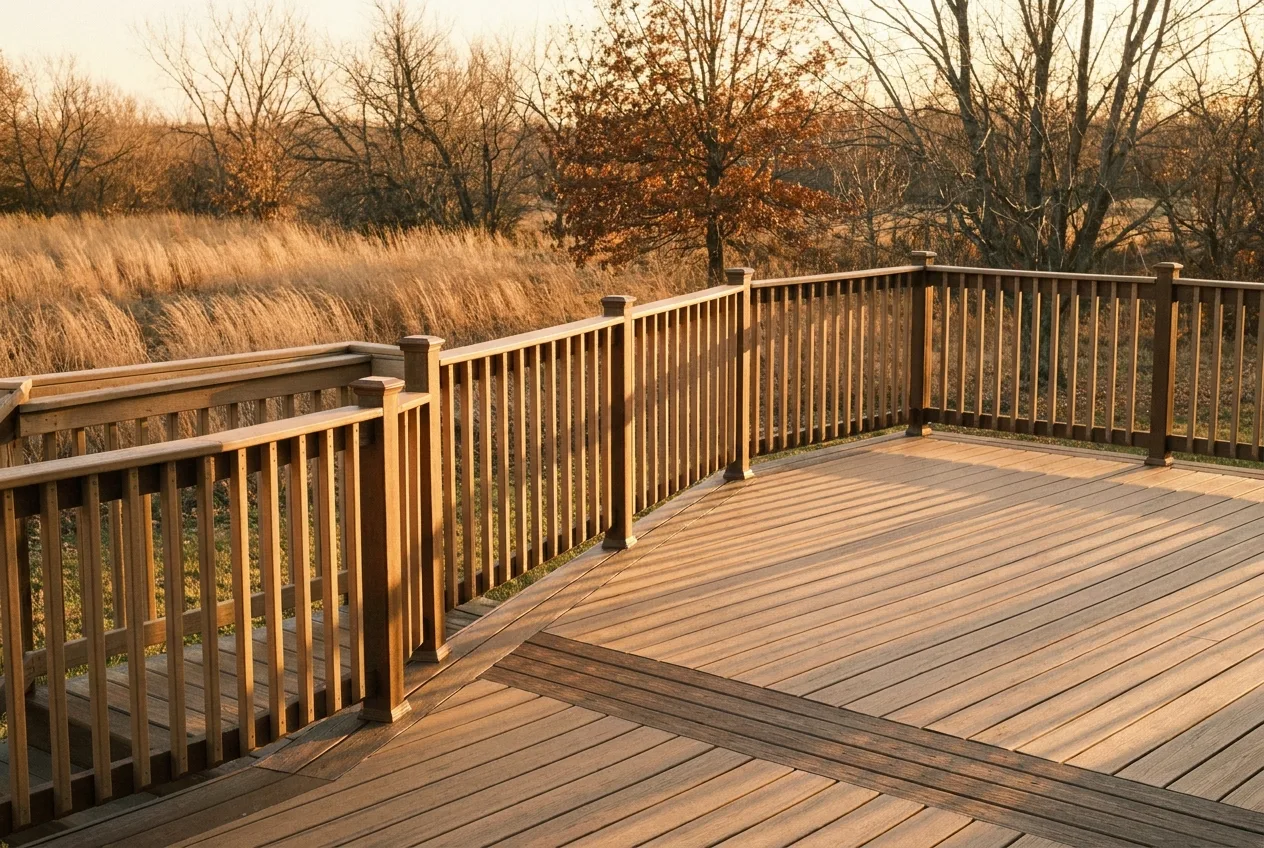
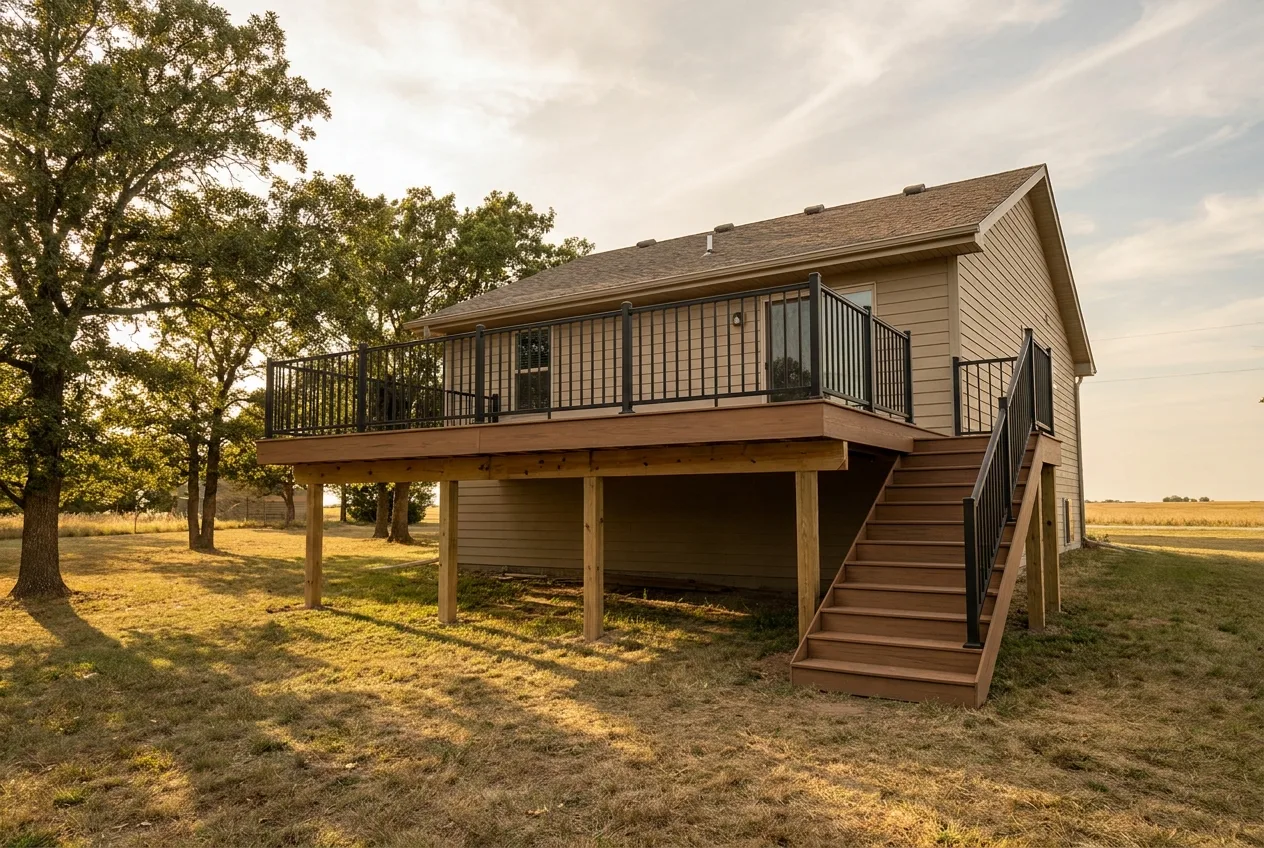
The Best Time of Year to Build a Deck in Kansas
How the Kansas building calendar affects timing for decks, covers, and other exterior projects.
· 6 min read
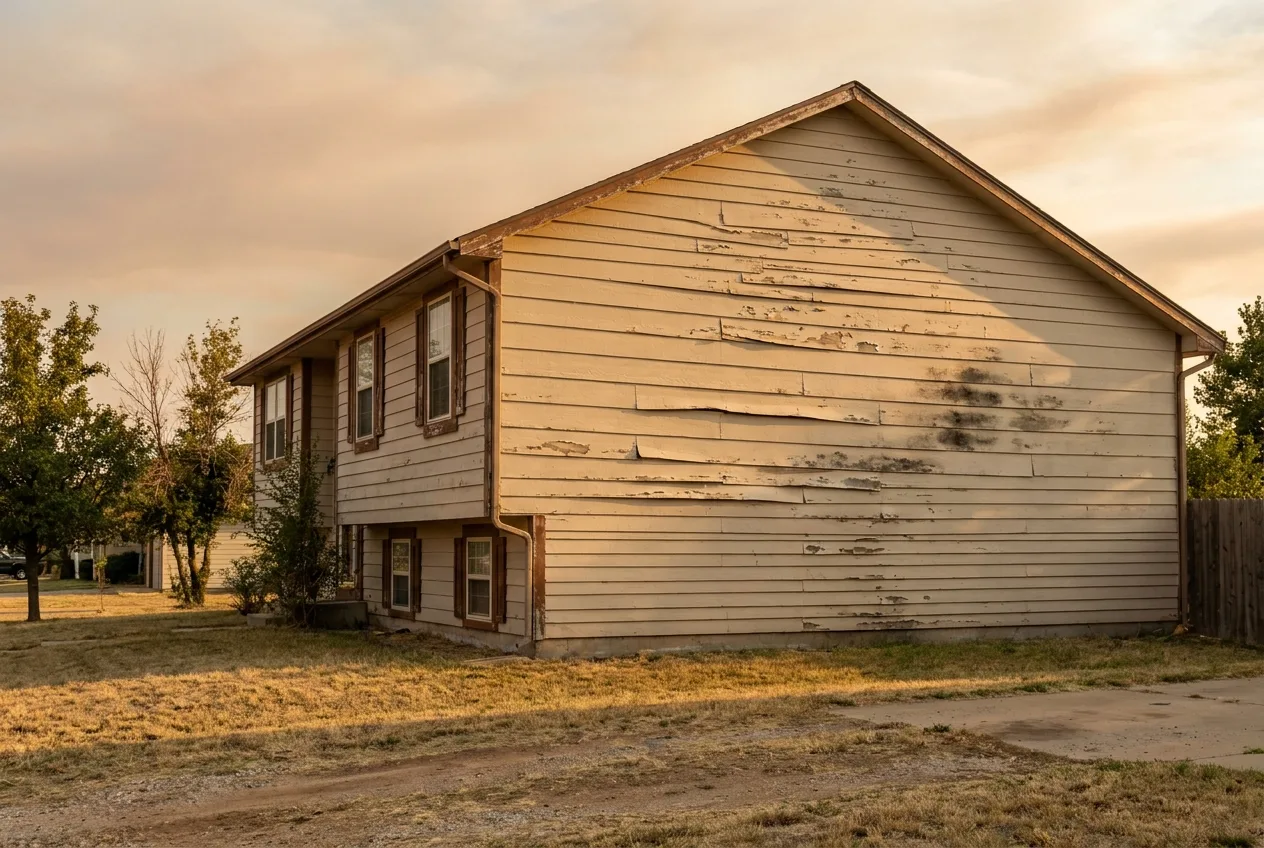
The signs that matter most are the ones that mean water is getting behind your siding, not just sitting on top of it. Soft or spongy spots, rot at the bottom edges and around windows and doors, gaps opening at the joints, and staining or peeling paint on the inside of an exterior wall are the ones worth taking seriously.
Fading, chalking, and a coat of paint that has stopped holding are a different problem. That's wear, and wear is not the same thing as water getting in.
Homes built in Manhattan during the 1990s and 2000s make up roughly half of the local housing stock, and those houses are decades into the life of their original siding. That's part of why this conversation keeps coming up right now.
There are two categories of signs worth telling apart: what shows up on the surface, and what means water has already found its way in.
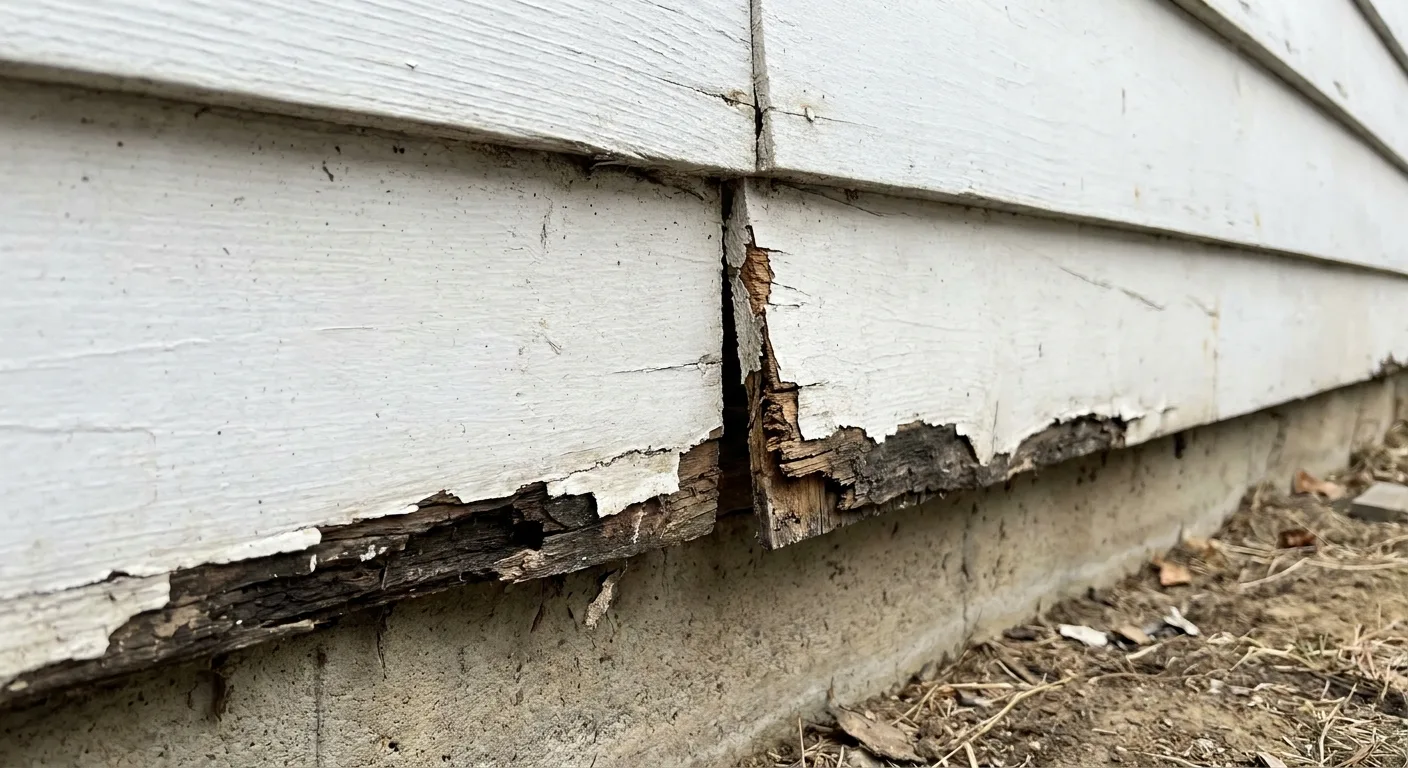
Most of what follows is wear, and wear on its own is a decision about appearance and upkeep, not an emergency. The ones that matter more are the ones that let water in: gaps, splits, and anything pulling away from the wall.
These are the ones worth acting on, because what they suggest is that the problem has moved past the siding itself.
Water finds the edges. The places worth looking hardest are where siding meets something else or where water tends to concentrate: the bottom courses near grade, around window and door openings, under gutter runs and downspout outlets, and on walls that stay wet longest because they get the least sun. Siding failure is usually discovered rather than planned for: the siding is the visible layer, and by the time a board feels soft, the moisture has generally been there for a while. A wall can look fine from the street and still be wet behind one section.
From the outside, you can tell that water is getting in. What you can't tell is how far it has gone. That's the question that requires someone opening a section up, and it's the reason a real look is worth more than a longer list of symptoms.
Census figures put roughly half of Manhattan's housing stock in the 1990s and 2000s: about 9 percent from the 1990s and 41 percent from the 2000s. Those houses are decades into the life of their original builder-grade siding, which is a normal place for original siding to end up. It's part of why this conversation comes up so often locally, not a sign that every house of that age is failing.
Manhattan's climate doesn't do exterior materials any favors either: hot, humid summers, freeze-thaw cycling through the winter, roughly 35 inches of rain a year, and hail that shows up with some regularity. None of that is unusual for the region, but it means siding here works harder over time than a spec sheet written for milder climates would suggest.
If your siding is from that era and it's the older LP product, here's what changed: the original 1990s OSB Inner-Seal siding was a documented failure product that was discontinued, and the LP SmartSide sold today is a different, SmartGuard-treated line. Tallgrass is a certified LP SmartSide installer, and the difference between the two is worth reading if you want it explained properly.
Described here in general terms rather than about any one house: siding is the layer that keeps water off what's behind it. When water gets past it, the exposure moves from the siding itself to the sheathing and the framing underneath, and work on those typically means opening the wall up rather than simply refinishing its surface, which is a bigger job than work on siding alone. This is also how the problem often surfaces for homeowners who weren't tracking it closely: at an appraisal, during an inspection ahead of a sale or a refinance, or in an insurance conversation after a storm.
Waiting is a decision with a cost attached, and the cost is that the scope grows.
The honest answer is that it depends, and it depends on two things. First, weathering and color match: new material set against boards that have weathered for twenty years rarely matches, and the patch tends to read as a patch. Second, whether the problem is only in the boards, because replacing visible damage while leaving moisture in the wall is spending money on the symptom rather than the cause. Which one matters more depends on how much of the wall is affected and what's behind it.
If you want to compare the material options, vinyl, fiber cement, engineered wood, and LP SmartSide, our residential siding page covers them in detail, and you can see finished siding work in our gallery as well. If you're timing an exterior project against the rest of your calendar, our guide to the best time to build in Kansas covers how the season affects scheduling.
The specific answer to whether this is a section or a whole wall is a look, and the look is a free estimate.
From the outside, you can tell that water is getting in, but not how far it's gone, and that's exactly what a real look settles. If you'd like one of our crews to take a look at your siding, we're glad to come out and give you a straight answer.
Licensed and insured. Free estimates.
How the Kansas building calendar affects timing for decks, covers, and other exterior projects.
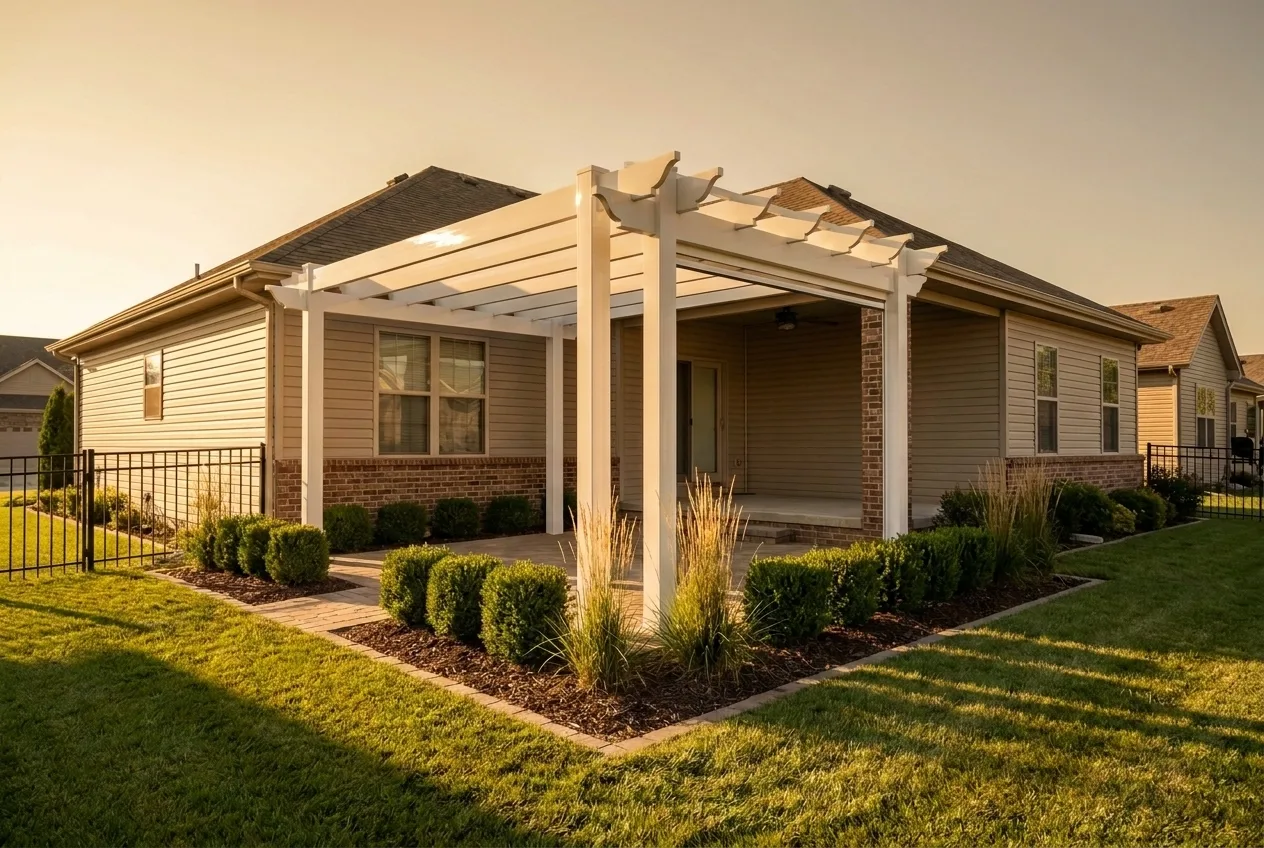
What governed neighborhoods should know before adding a pergola, since exterior changes usually need architectural review.
Does a new deck in Manhattan need a building permit, and where the city's threshold falls.