
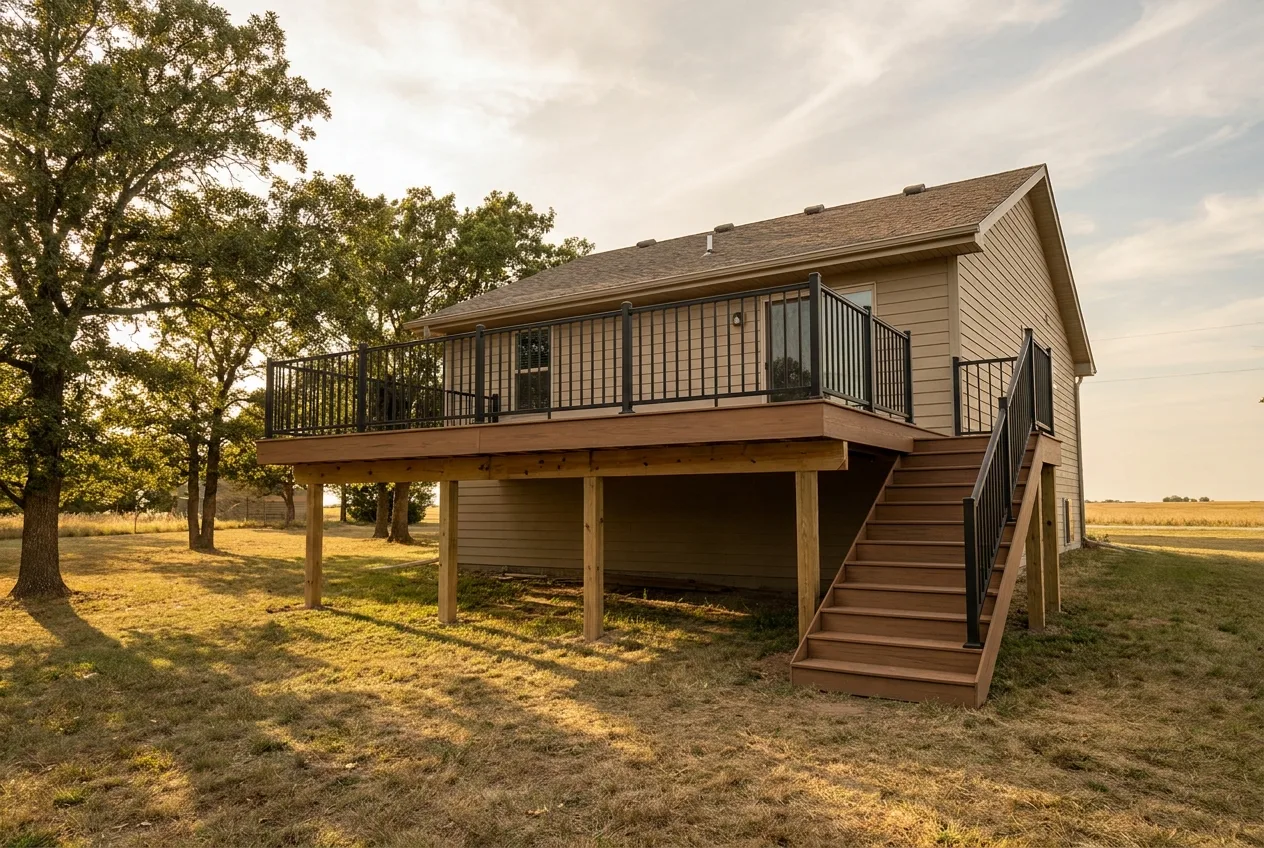
Do You Need a Permit to Build a Deck in Manhattan, KS?
The other half of the front end of your project: what triggers a permit and how the process works.
· 6 min read
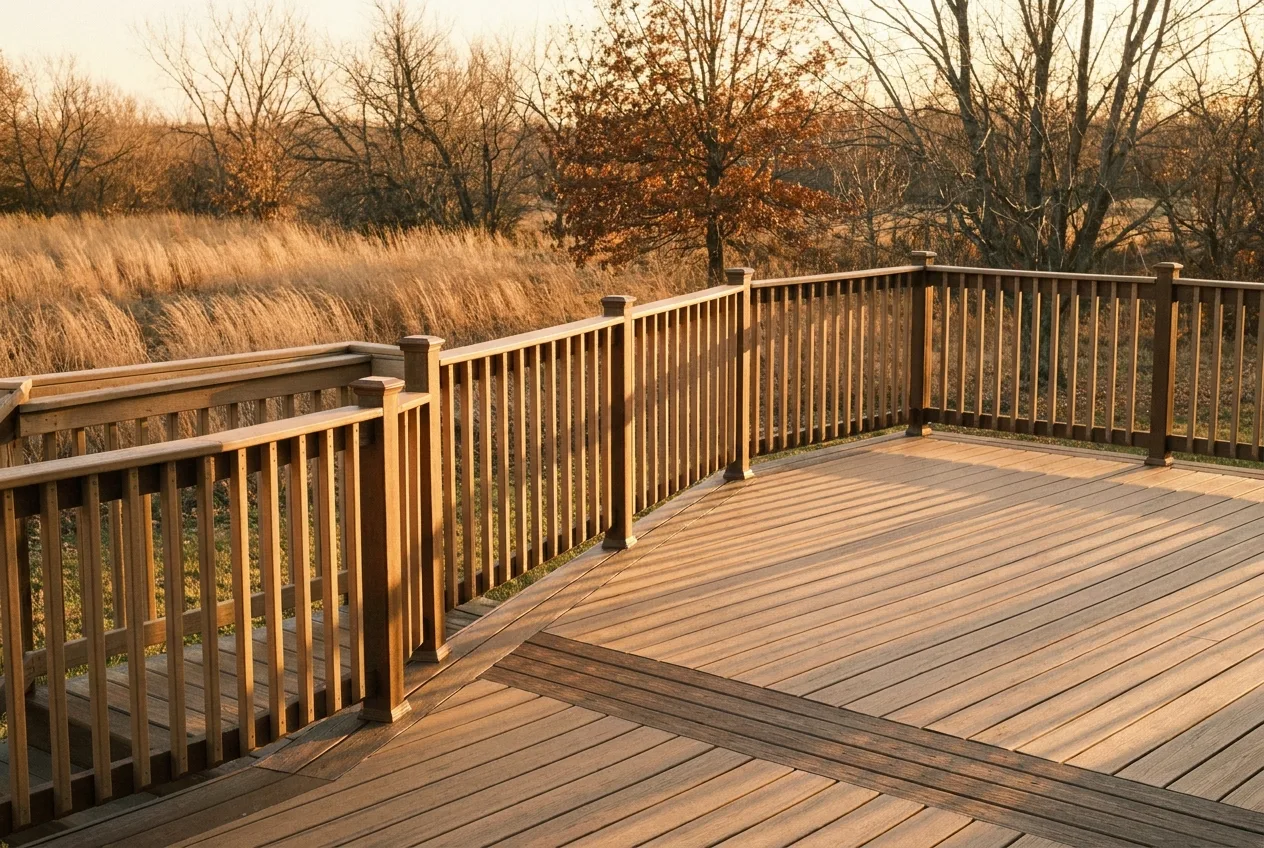
Deck building in this part of Kansas runs roughly April through October, when the ground is workable and the weather cooperates. The better question, though, is when to start the conversation, not when to start the build, and the answer to that one is often fall or winter: a project decided in November sits at the front of the spring instead of behind it.
Less weather stops work than most people assume, and the days that do stop it are not always the ones you would guess.
The material you choose also changes how much the calendar matters at all, because one of the two decking options has a finishing step that waits on dry weather, and the other does not.
Outdoor construction in this part of Kansas is most reliably workable roughly April through October. The ground is not frozen, the ground is not saturated, and the weather is not actively fighting the schedule. That window reflects the regional and industry pattern for outdoor building work generally, not a promise about when any specific project can start.
The inquiry window and the build window are not the same thing, and the gap between them is the real subject of this article. Most homeowners start calling about a new deck once spring arrives, which is exactly when everyone else looking for outdoor construction work does too. That timing feels natural, but it is also the least strategic moment to begin.
The two windows drift apart because every project has a front end and a back end. Deciding on a design, settling on materials, and getting permitting handled do not require good weather at all. Footings, framing, and decking do. Naming that split is what makes the rest of this calendar make sense.
Saturated ground after sustained rain will stop a build, because footings cannot be set into soup. Ground frozen hard enough that a post hole cannot be dug properly does the same, and so does snow sitting on the work surface. Add in the storm days that come with a Kansas spring and summer, on top of hot, humid summers, freeze-thaw winters, roughly 35 inches of annual precipitation, and recurring hail activity, and the picture is clear: these are ordinary conditions, not omens, and the reason a build calendar exists at all.
Cold on its own does not stop much: a hard frost overnight, a gray week, short daylight hours are not blockers by themselves. A dry, cold, still January stretch is often a better working week than a warm, wet April one, which is not the sentence most people expect to read about winter construction. Whether a given week is actually workable is a judgment made standing in the yard, not one a calendar can make far in advance.
Winter is not a closed door. It is a slower, less predictable one, and that difference matters more for scheduling than it does for whether the work can happen at all.
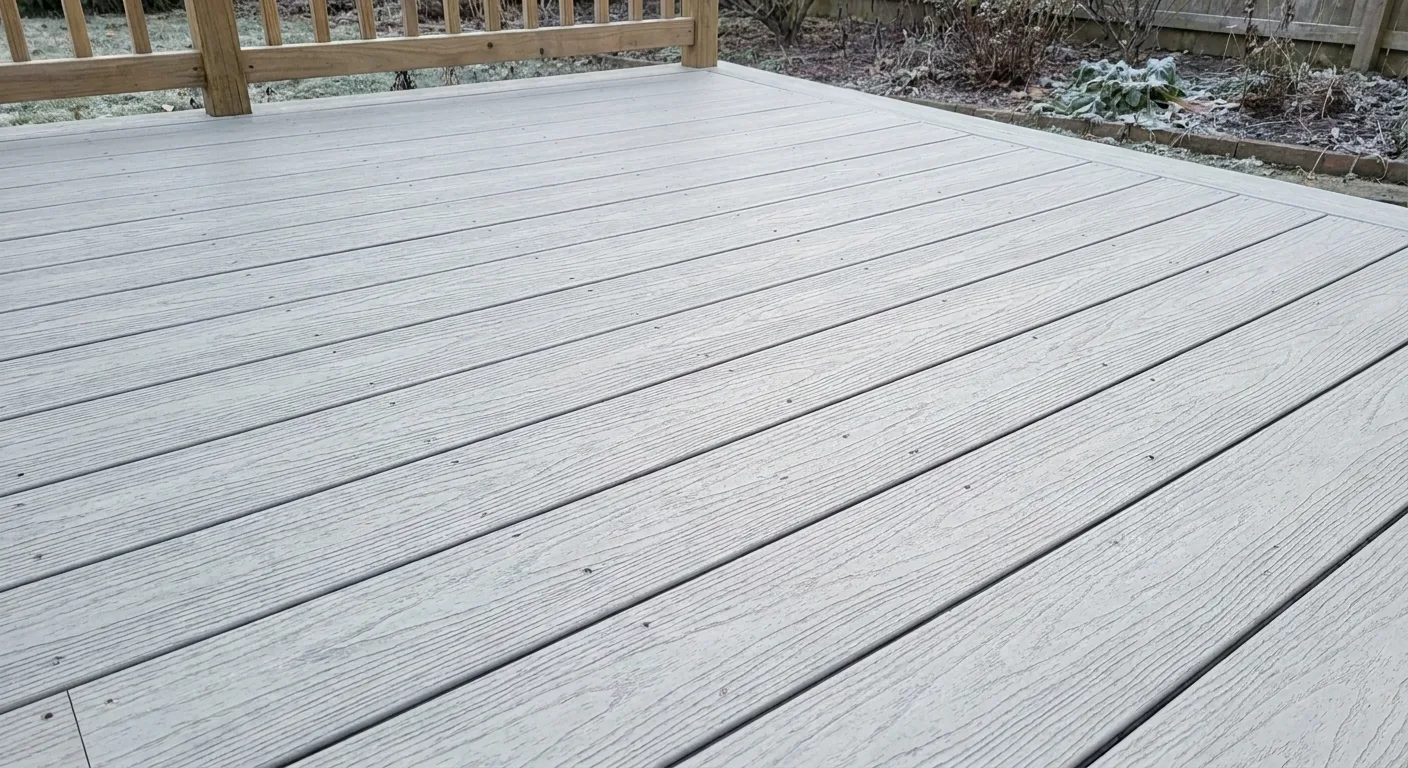
A treated deck is not finished when the last board goes down. It still needs a stain or sealer that has to go on dry and cure dry, tying the finish to the weather in a way the framing is not. Composite has no finishing step like that. Once it is built, it is done.
This is also the honest answer to a question a lot of people already have: how cold is too cold to seal a deck? There is no single number, and that is not a dodge. A stain or sealer needs dry material, dry weather while it goes on, and a dry stretch afterward to cure, which is why late-season finishing gets squeezed, not the framing. The specific conditions live on that product's label, and whether a week works is a call made on site.
For a composite build, the calendar governs the construction, not the completion. A late-season composite deck does not sit unfinished, waiting on a dry stretch in the spring.
Working out which material is right for your project is worth doing early, and our decks page compares composite and treated side by side.
Everything ahead of the first shovel takes real time: an estimate, a decision about materials and scope, a finished design, and permitting handled. None of that needs good weather. All of it has to happen before a spring build can start. Handling it in the fall means spring starts at the build itself, instead of at the beginning.
Spring is also when the calls come, generally, across this industry, the same way most people start thinking about a summer project once the weather turns warm. A homeowner who starts the conversation in the fall or winter is not competing with that wave for attention.
Here is the plain answer to a question worth asking directly: is it cheaper to build a deck in the fall? No. There is no off-season rate here, and no seasonal promotion. The real advantage of starting in the fall or winter is timing and attention, not price, and it is worth being straightforward about that rather than pretending otherwise.
The practical way to plan is to start from the weekend you actually want to be out there and count backward through the steps.
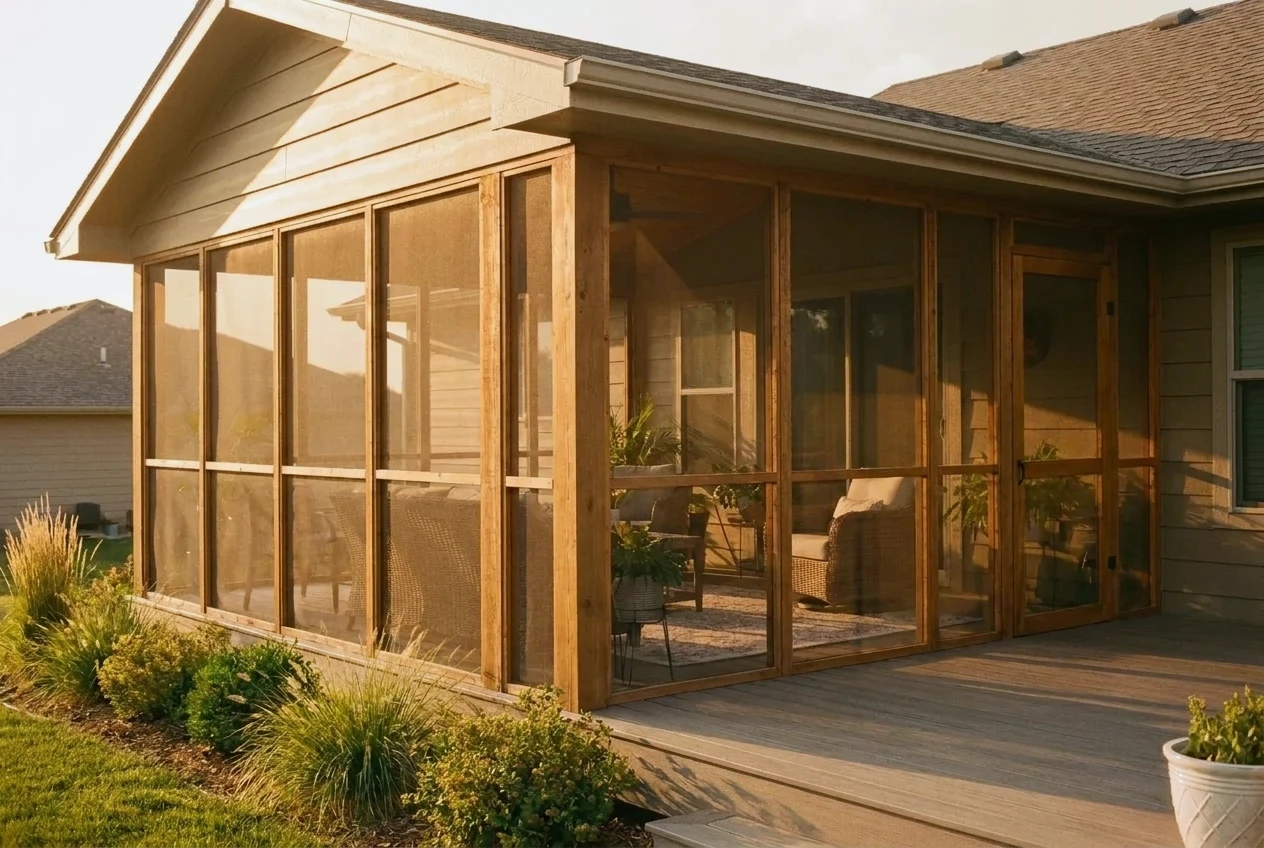
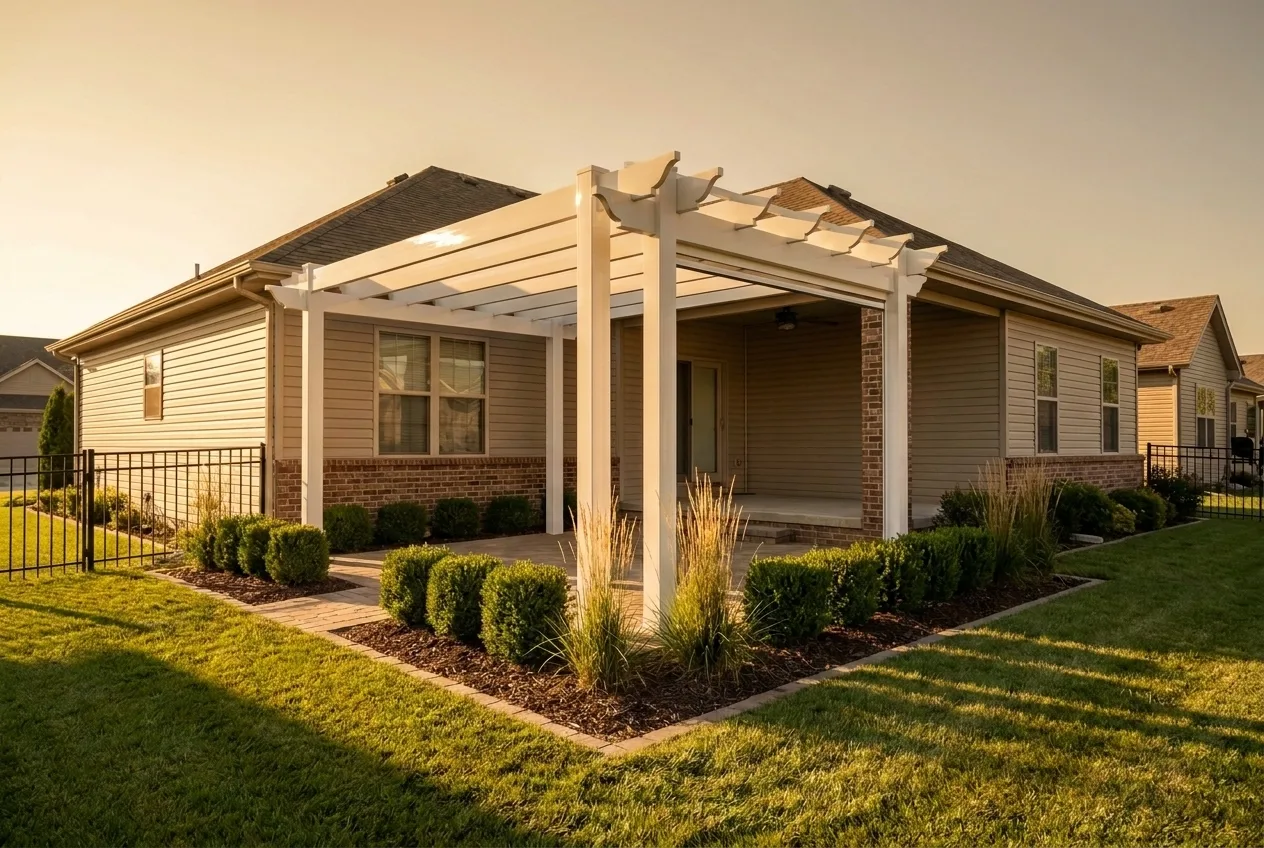
If a roof cover or screened porch is part of the plan, that is more structure, and it belongs in the conversation from the start rather than added later. Our deck covers and screened porches page runs through roof covers over new decks, over existing decks, and screened porch conversions.
The timing question is just one of the things a free estimate settles, along with material, scope, and what your project actually needs. There is no wrong month to have that conversation. Reach out whenever works for you, and we will help you sort out the rest.
Licensed and insured. Free estimates.
The other half of the front end of your project: what triggers a permit and how the process works.
For the reader whose project turns out to be more than a deck.
For the reader in a governed neighborhood, where the calendar has a review process built in.